

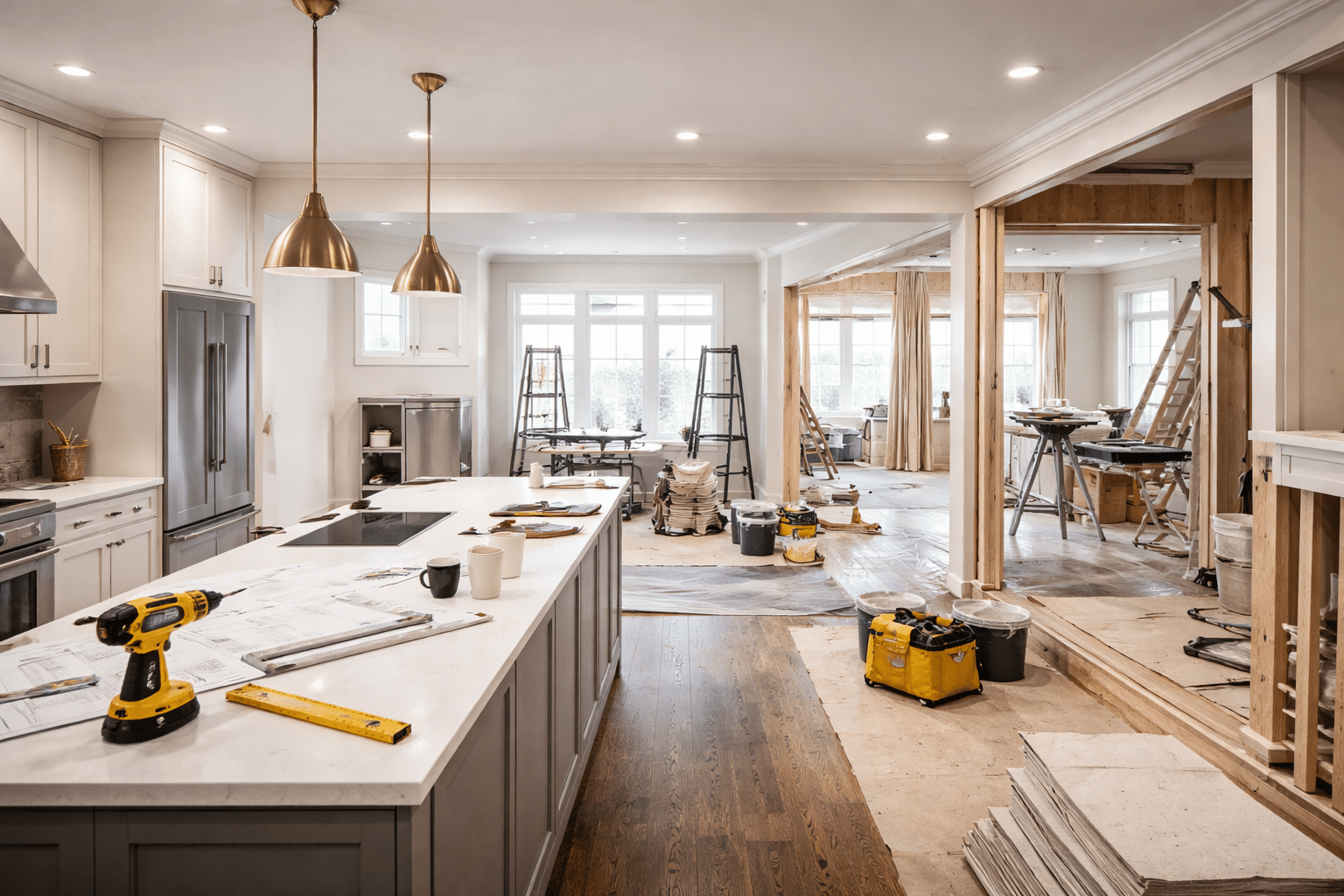
Major renovations can dramatically improve how a home functions, feels, and supports daily life. They can unlock unused space, correct long-standing issues, and adapt a home to changing family needs. They can also introduce complexity, cost, and stress if they are approached without the right preparation.
Unlike new construction, renovations require working within existing structures, systems, and constraints. Many of those constraints are hidden behind walls and ceilings and only become visible once construction is underway. Understanding how renovation projects truly work helps homeowners make better decisions and avoid unnecessary surprises.
Based on decades of hands-on renovation experience, here are ten key things every homeowner should understand before starting a major renovation.
What this blog covers
-
Why defining scope before design matters
-
How permits affect timelines
-
The importance of budget contingency
-
Why structural changes ripple through the home
-
How building codes influence design
-
The long-term impact of design decisions
-
Why mechanical systems deserve early attention
-
How material choices affect schedule and cost
-
The role of documentation in smooth projects
-
Why an integrated team reduces risk
1. The Scope Should Be Defined Before Design Begins
One of the most common renovation mistakes is starting design discussions without clearly defining the scope of work. Inspiration images are helpful, but they do not replace clarity around objectives.
A well-defined scope answers questions such as:
• Which areas of the home are included
• Whether changes are cosmetic, functional, or structural
• What problems the renovation is meant to solve
• What success looks like when the project is complete
Without a defined scope, projects tend to expand unintentionally. Costs rise, timelines stretch, and decisions become reactive rather than intentional. A clear scope provides boundaries that support better design, clearer pricing, and smoother execution.
2. Permits Take Time and Influence the Schedule
Many major renovations require permits, particularly when they involve:
• Structural modifications
• Plumbing or electrical changes
• Layout alterations
• Basement finishing or secondary suites
Permit timelines vary by municipality and complexity. Design development, engineering, and permit review often happen in sequence, not simultaneously. Delays typically occur when permitting is treated as an afterthought.
Early planning allows permit requirements to inform design decisions rather than disrupt them. It also helps homeowners align expectations with realistic construction start dates.
3. Budget Needs a Contingency From Day One
Even the most carefully planned renovation will uncover unknowns once walls are opened. Older homes in particular may reveal:
• Outdated wiring or plumbing
• Structural deficiencies
• Moisture damage
• Materials requiring remediation
A realistic renovation budget includes a contingency allowance, typically ten to fifteen percent of construction costs. This buffer allows the project to move forward without compromising quality or design intent when unexpected conditions arise.
Contingency planning is not pessimistic. It is responsible.
4. Structural Changes Trigger a Chain Reaction
Removing or relocating a wall often affects much more than the visible structure. Structural changes can impact:
• Load paths and beam sizing
• Ceiling heights and bulkheads
• Foundation requirements
• Mechanical and electrical routing
What appears simple on a floor plan may require engineering, additional framing, and coordinated trade work. Understanding this chain reaction early helps homeowners appreciate why structural changes carry additional cost and complexity.
5. Building Codes Shape What Is Possible
Renovations must comply with current building codes, not the standards in place when the home was originally built. This can influence:
• Ceiling heights and stair geometry
• Fire separation and sound control
• Ventilation and insulation requirements
• Egress window sizes
Basement renovations and legal rental suites are particularly affected by code requirements. When addressed early, code compliance provides a framework for safe, durable, and valuable outcomes. When ignored, it often results in redesigns and delays.
6. Design Decisions Affect Long-Term Results
Renovation design choices influence how a home feels and operates for decades. Decisions around layout, window placement, insulation continuity, and air control all matter.
Thoughtful design can:
• Improve comfort and consistency
• Reduce future maintenance
• Lower long-term operating costs
• Extend the life of building components
Strong outcomes come from coordinated details, not from adding complexity or chasing labels. Renovations present an opportunity to correct weaknesses and improve how the home performs in everyday use.
7. Mechanical Systems Matter More Than Most Expect
Heating, cooling, ventilation, and plumbing systems are often overlooked during early design, yet they play a critical role in daily comfort.
Mechanical planning should consider:
• Equipment sizing and placement
• Duct and pipe routing
• Ceiling space and bulkhead impact
• Long-term service access
Renovations often tighten the building envelope and change room layouts. Mechanical systems must be designed to suit the updated home, not simply reused from the original configuration.
8. Material Choices Affect Schedule and Cost
Material selections influence more than aesthetics. They affect lead times, sequencing, and project flow.
Items that often require early decisions include:
• Custom cabinetry and millwork
• Specialty tile and waterproofing systems such as those from Schluter Systems
• Custom windows and exterior doors
Late selections can stall construction or force substitutions. Finalizing key materials early allows procurement to align with the construction schedule and provides greater cost certainty.
9. Documentation Protects Everyone
Clear documentation creates alignment between homeowner and builder throughout the renovation process.
Effective documentation includes:
• Detailed drawings and specifications
• Written scope descriptions
• Documented change orders
• Clear pricing adjustments
Renovations involve hundreds of decisions over time. Well-documented projects reduce misunderstandings, maintain trust, and tend to finish closer to the original plan.
10. One Integrated Team Reduces Risk
Renovations require coordination across design, engineering, construction, and project management. Fragmented responsibility increases the likelihood of miscommunication and delays.
An integrated design-build team allows:
• Early identification of challenges
• Realistic evaluation of options
• Faster decision-making
• Clear accountability
This approach simplifies communication for homeowners and reduces the risk of surprises during construction.
Final Thoughts
Successful renovations are rarely defined by one bold design move. They are the result of hundreds of informed decisions made with clarity, experience, and foresight.
When homeowners understand how renovation projects truly work, they are better positioned to make choices that protect their investment, improve daily life, and deliver lasting value.
At OakWood, our renovation process is built around thoughtful planning, clear communication, and long-term thinking. If you are considering a major renovation and want to understand what is possible for your home, we invite you to reach out to our team to start a conversation about your renovation goals.