

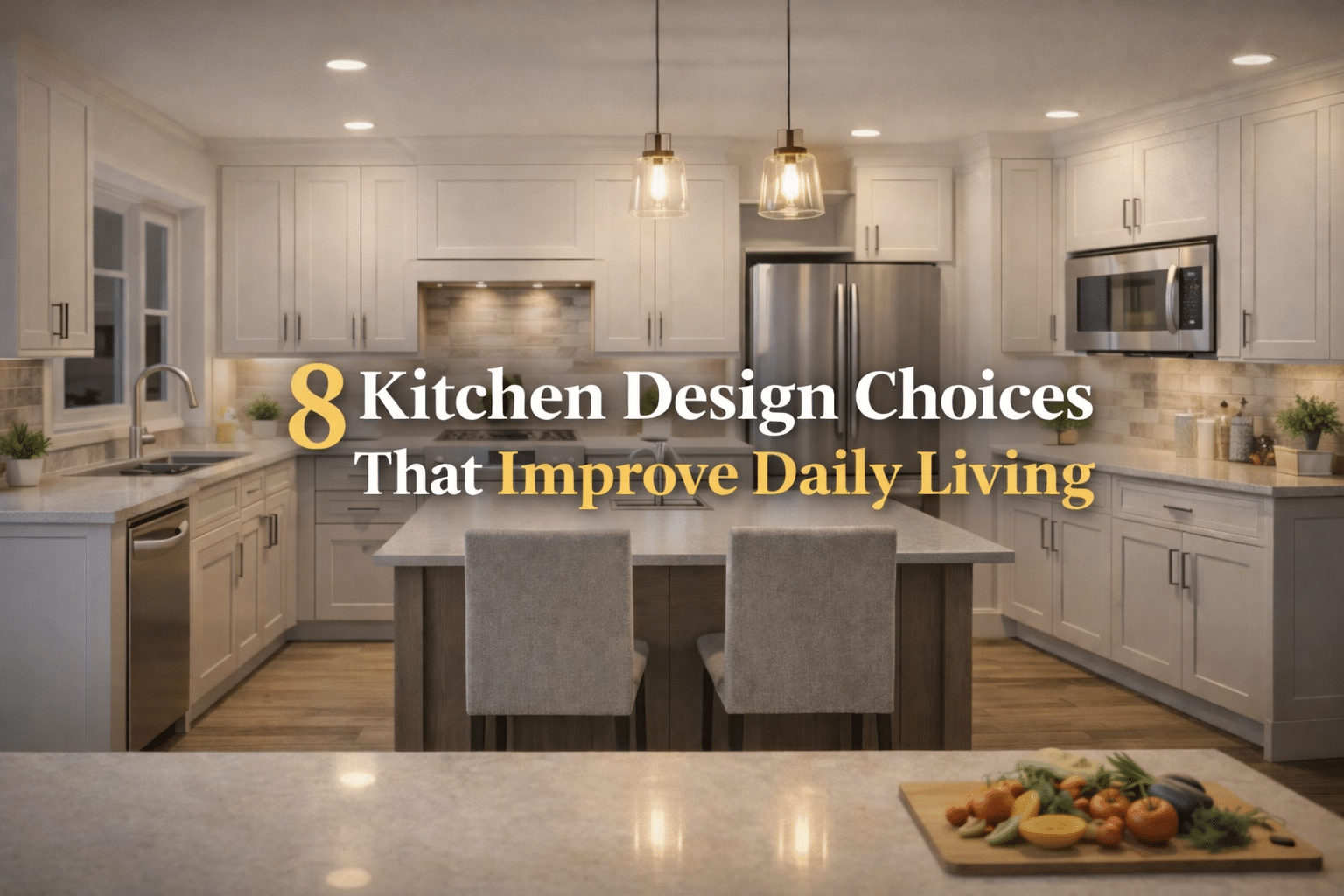
The kitchen is the most used space in the home, and kitchen design for daily living plays a direct role in daily comfort, efficiency, and enjoyment. Small design decisions here can have an outsized impact on how easily everyday routines unfold.
Well-designed kitchens are not defined by trends or showpieces, they are defined by how easily daily tasks unfold within them. Cooking, cleaning, gathering, and moving through the space all place demands on layout, lighting, storage, and electrical planning that no single feature can solve alone.
At OakWood, kitchens are designed as working spaces first, spaces that must perform reliably through daily routines, family changes, and long-term use. Our approach to custom kitchen renovations is grounded in observation, experience, and careful planning rather than trends. Each decision is evaluated for how it supports daily living, not just how it looks in isolation.
Kitchens that truly improve daily living are those where decisions are made deliberately, with real use in mind rather than appearance alone.
1. Layout Decisions That Support Daily Living
Designing an effective workflow requires more than intuition; it requires a structured process that considers how the space will be used day after day. A thoughtful design-build process allows layout decisions to be tested against real routines early, reducing compromises later and ensuring the kitchen functions smoothly once built.
The relationship between cooking, cleaning, storage, and prep areas matters more than aesthetics.
A kitchen that looks balanced but ignores workflow will reveal its shortcomings quickly: appliances block circulation, prep zones feel disconnected, and multiple people working in the space create conflict rather than collaboration.
Workflow-driven layouts account for sequence. Ingredients move from storage to prep to cooking. Dishes move from table to sink to dishwasher to storage. When these paths are clear and efficient, daily routines become smoother without conscious effort. Efficient circulation also reduces unnecessary steps, saving time and reducing fatigue over the long term. The kitchen feels calmer because movement is predictable rather than improvised—even during busy periods.
2. Adequate Prep Space
Prep space is one of the most common failures in kitchen design. Kitchens often appear large but lack usable work surfaces where they are actually needed. Counter space near the cooktop and sink is essential. Without it, tasks become awkward, and clutter accumulates quickly.
Generous, well-placed prep areas allow multiple tasks to happen simultaneously. Chopping, mixing, plating, and cleaning can occur without conflict. When prep space supports the workflow, cooking becomes less about managing space and more about the task itself, making daily routines easier and more enjoyable.
3. Storage Choices That Support Daily Living
Storage works best when it reflects real habits. Deep drawers for cookware, accessible pantry storage for frequently used items, and thoughtfully designed cabinet interiors all contribute to ease of use. Storage should be based on frequency and context of use, not just where items fit.
Kitchens relying on standard storage assumptions often force homeowners to adapt: items are stacked awkwardly, frequently used tools are stored too far from their point of use, and clutter accumulates on counters. When storage is designed around routine, the kitchen stays organized naturally, requiring less constant effort to maintain.
4. Appliance Integration
Appliances play a major visual and functional role in the kitchen.
Paneled appliances and consistent finishes help kitchens feel calm and cohesive. Integration does not mean hiding everything—it means selecting and placing appliances intentionally so they support the overall environment rather than compete with it. Consistent alignment, balanced proportions, and thoughtful placement contribute to a kitchen that feels settled.
Reducing visual clutter allows the eye to rest, creating a space that feels relaxed even during daily use. In kitchen design for daily living, storage decisions should reflect real habits, not showroom assumptions.
5. Lighting Layered by Task
Good kitchen lighting rarely comes from a single source.
Layered lighting, ambient, task, and accent, serves multiple purposes. Under-cabinet lighting supports prep, island lighting defines work and gathering zones, and general lighting provides overall visibility without glare. Poor lighting increases frustration and can compromise safety, especially during early mornings or evenings.
Thoughtful lighting adapts to different times of day and different activities, supporting focus when needed and receding when not, allowing the kitchen to shift easily between work and gathering.
6. Adequate Electrical Planning
A well-planned electrical layout is essential but often overlooked.
Kitchens today rely on multiple appliances, charging stations, and smart devices. Outlets must be strategically placed to prevent cords from running across counters or floors, and circuits should be capable of handling high-demand appliances simultaneously.
Insufficient electrical planning can lead to inconvenience, frustration, or even safety hazards. Properly placed outlets, dedicated appliance circuits, and thoughtful integration of lighting and under-counter power points ensure the kitchen functions smoothly without improvisation.
Adequate electrical planning supports workflow, reduces clutter, and future-proofs the space as technology and family routines evolve.
7. Durable Surfaces Where It Matters
Work surfaces experience constant use. Countertops, floors, and high-contact areas should withstand daily wear without requiring constant maintenance. Selecting durable materials reduces stress and long-term upkeep.
Durable surfaces also influence behavior: homeowners feel comfortable using the kitchen fully, without worrying about every spill, scratch, or impact. This freedom encourages the kitchen to be lived in rather than preserved. Materials chosen for durability also tend to age gracefully, developing character rather than showing failure.
8. Clear Separation of Work and Gathering Zones
Kitchens often serve both functional and social roles.
Cooking and gathering coexist successfully when the layout supports both without conflict. Islands, secondary prep areas, and walk-through pantries help create balance. Clear separation allows cooks to work efficiently while others gather nearby without interrupting workflow. Thoughtful zoning ensures the kitchen remains both functional and welcoming, even during entertaining or busy family routines.
Kitchens That Support Daily Life
In both renovations and new builds, kitchen decisions should be made in context with the rest of the home. Thoughtful custom home design considerations ensure that kitchens connect logically to adjacent spaces, support long-term living patterns, and remain functional as households evolve over time.
Kitchens that improve daily living are not defined by bold gestures or fleeting trends; they are defined by decisions that remove friction from routine. Thoughtful kitchen design for daily living removes friction from routine rather than adding visual noise.
Layout, prep space, storage, lighting, electrical planning, and durable materials work together to support daily use. Each choice contributes to a kitchen that feels calm, efficient, and comfortable. Over time, these qualities matter more than any single feature. The kitchen becomes a space that supports life rather than one that demands attention.
Designing for daily living requires restraint, observation, and experience. When done well, the result is a kitchen that performs quietly and reliably, day after day, regardless of changing styles or evolving routines.