

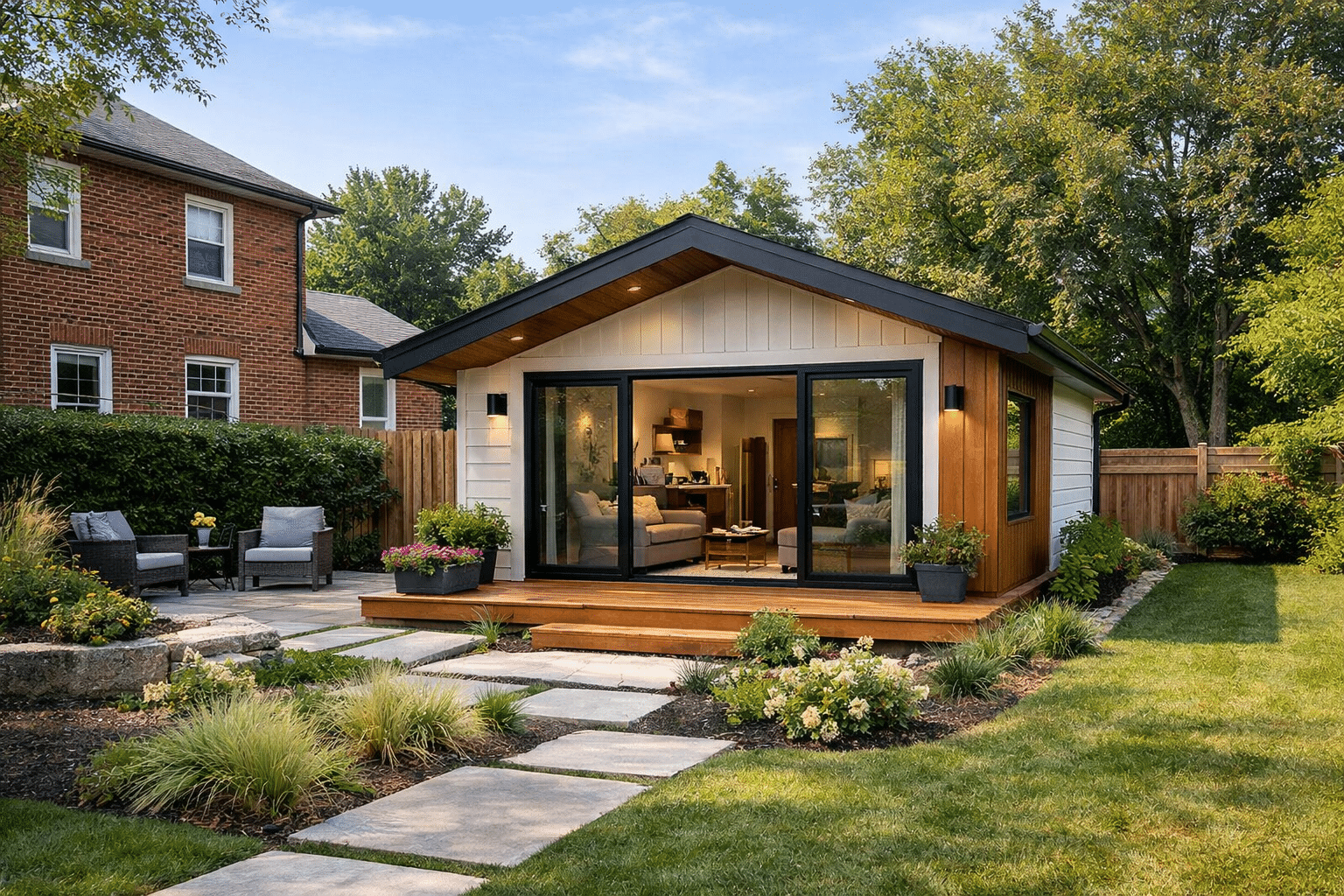
Accessory Dwelling Units Ontario homeowners are increasingly exploring flexible housing solutions that allow families to adapt their properties to changing needs. Whether the goal is multigenerational living, aging-in-place support, or long-term housing flexibility, ADUs are becoming a practical and policy-supported option across Ottawa and surrounding communities.
An accessory dwelling unit (ADU) is a self-contained residential unit located on the same lot as a primary home. These units are designed to function independently, with their own kitchen, bathroom, living, and sleeping areas, while remaining subordinate to the main dwelling.
What Counts as an Accessory Dwelling Unit in Ontario?
In Ontario, ADUs are broadly defined as secondary residential units that are ancillary to a primary dwelling. They can take several forms, depending on site conditions, zoning, and building code compliance.
Common ADU configurations include:
- Basement or interior secondary suites
- Detached garden suites
- Coach houses above garages
- Laneway houses (where applicable)
Ontario legislation allows up to three residential units on many urban residential lots, subject to municipal zoning and servicing constraints. This framework has significantly expanded opportunities for homeowners, particularly in established neighbourhoods.
Why Ontario Is Encouraging ADUs
Provincial housing policy has shifted toward gentle density—adding housing without dramatically altering neighbourhood character. ADUs help achieve this by:
- Increasing housing supply within existing communities
- Supporting multigenerational households
- Making efficient use of serviced land
- Allowing homeowners to adapt homes over time rather than relocate
From a planning perspective, ADUs are viewed as a low-impact way to address housing needs while preserving streetscapes and infrastructure.
Types of Accessory Dwelling Units in Ontario
Basement or Interior ADUs
These are the most common ADUs in Ontario and are typically created through renovation. They may be fully below grade or partially above grade and often share utilities with the main home.
Key considerations include:
- Fire separations and sound control
- Ceiling height and points of egress
- Mechanical system capacity
- Independent or shared entrances
Garden Suites
Garden suites are detached units located in the rear yard. Ontario has explicitly enabled these structures, provided zoning and servicing requirements are met.
They are well-suited for:
- Aging parents or adult children
- Long-term flexibility without interior renovations
- Properties with generous rear-yard depth
Coach Houses
Coach houses are typically built above a detached garage or as a separate unit, provided that the property size allows for it make sure to check your local zoning requirements. They allow for compact, efficient ADUs while maintaining usable yard space.
These structures require careful coordination of:
- Structural design
- Fire separation between the new structure and the existing dwelling
- Height of the new structure
OakWood regularly evaluates all of these options when designing custom home additions and backyard structures that align with long-term homeowner goals.
Zoning and Municipal Rules: What Matters in Ottawa
While Ontario sets the legislative framework, municipal zoning bylaws control the details. In Ottawa, zoning regulations address:
- Maximum unit size relative to the main home
- Setbacks from property lines
- Lot coverage and building height
- Servicing (water, sewer, stormwater)
- Parking requirements, where applicable
Neighbourhood context, lot dimensions, and existing conditions all influence feasibility. Early zoning review is critical before design begins.
Ontario Building Code Requirements for ADUs
All accessory dwelling units must comply with the Ontario Building Code (OBC). This ensures safety, durability, and habitability.
Key OBC considerations include:
- Fire separations between units
- Independent egress paths
- Smoke and carbon monoxide alarms
- Minimum room sizes and ceiling heights
- Energy efficiency requirements
- Structural design for new detached units
Existing homes undergoing renovation may fall under Part 11 (Renovations) of the Code, while new detached ADUs are typically designed under Part 9. Understanding which pathway applies is essential for approvals.
Servicing and Infrastructure Considerations
Before proceeding, homeowners must confirm that their property can support an additional dwelling unit. This includes:
- Water and sanitary sewer capacity
- Electrical service upgrades
- Heating and cooling system design
- Stormwater management
In some cases, upgrades are required to ensure long-term performance and compliance. These requirements are highly site-specific and should be assessed early in the planning process.
Designing an ADU for Long-Term Use
Good ADU design balances efficiency, comfort, and future adaptability. Important design principles include:
- Universal design and accessibility features
- Natural light and ventilation
- Acoustic separation
- Privacy for both dwellings
- Energy-efficient assemblies
OakWood’s Ottawa design centre and material selection support help homeowners make durable, climate-appropriate choices suited to Eastern Ontario conditions.
Planning, Permits, and Approvals
Building an ADU is not a simple “add-on” project. A structured approach helps reduce risk and delays:
- Feasibility and zoning review
- Concept design and massing studies
- Building code analysis
- Permit drawings and submissions
- Construction and inspections
OakWood’s design-build process in Ottawa integrates these steps under one coordinated team, ensuring regulatory clarity and constructability from the outset.
Is an Accessory Dwelling Unit Right for You?
Accessory Dwelling Units Ontario homeowners choose are most successful when they align with long-term lifestyle planning. ADUs are particularly effective for:
- Multigenerational living arrangements
- Aging-in-place strategies
- Evolving family needs
- Future housing flexibility
Rather than viewing an ADU as a short-term project, successful homeowners treat it as a permanent extension of their property’s function and value.
Final Thoughts
Accessory dwelling units represent a meaningful shift in how Ontario homes are designed and used. With supportive provincial policy, evolving municipal bylaws, and clear building code pathways, ADUs are now a viable option for many Ottawa homeowners—when planned properly.
As with any residential construction, success depends on early feasibility review, code-compliant design, and experienced execution. When done well, an ADU can quietly transform how a property supports a family—today and decades into the future.