

Kitchen renovations are disruptive because the room is both technical and daily. It holds cooking, clean-up, storage, traffic, and often the routines that keep a household moving. If you treat disruption as an afterthought, the project can feel harder than it needs to be.
Disruption is not random. It is usually the predictable result of losing key functions at the same time: sink, cooking surface, fridge access, and a clear path through the space. When you plan those losses in advance, you can keep daily life functional while the work is underway, even if the room is not.
OakWood plans kitchen projects inside The OakWood Design-Build Process® so the living plan and the build plan stay aligned. The goal is simple: confirm constraints early, sequence work intelligently, and avoid avoidable surprises that push a kitchen offline longer than necessary.
Disruption is predictable when you define what must stay working
Most homeowners think about finishes first, then realise too late that the real stress is functional. A practical disruption plan starts by listing the non-negotiables for your household. That list changes based on kids, pets, dietary needs, shift work, or how often you entertain.
Break the kitchen into functions you can protect, replace, or live without for a period:
- Food: cold storage, heating, prep space, and where groceries will land.
- Water: where you will wash hands, fill a kettle, rinse dishes, and clean up spills.
- Storage and traffic: where everyday items live, and how people move through the house when the kitchen is a work zone.
- Safety and calm: how you will keep dust, noise, and tools away from kids, pets, and work-from-home spaces.
Then map those functions to the rough phases of work. Some days are noisy but usable. Some days are clean but inconvenient. A small number of days are full shutdown days. If you know which is which, you can plan around them instead of being surprised by them.
This is also where expectations matter. Many households can handle a short, intense disruption if the end date is credible. Fewer can handle a long stretch of mild inconvenience without it spilling into stress. Your disruption plan should match your household temperament as much as it matches the drawings.
Once the functions are clear, you can plan the trade-offs. For example, keeping the fridge in place might be worth a temporary counter setup, while relocating the fridge might free the trades to move faster. The right choice depends on your layout and your tolerance for short, intense disruption versus longer, lighter disruption.
Before construction starts, build a temporary kitchen plan that matches your household
A temporary kitchen is not a gimmick. It is the tool that keeps the project livable. The best temporary setups are simple, safe, and close to a sink. They also assume that some days will be noisier and less convenient than others.
Treat the temporary kitchen like a small scope with its own storage, lighting, and clean-up plan. If you wait until demolition day to improvise, you will spend the first week relocating items repeatedly.
1) Choose a temporary location with realistic utilities
The best spot is usually near water and away from the main work path. Many homes use a dining area, basement kitchenette, or a mudroom zone. The goal is to avoid running cords across traffic routes and to keep the temporary setup clear of demolition debris and fine dust.
If the renovation includes electrical work, plan for periods when power to parts of the kitchen is off. Identify one reliable circuit for the temporary setup and keep it simple. The temporary kitchen should make life easier, not introduce new safety risks.
2) Decide what appliances will bridge the gap
Most households can stay functional with a small set of interim tools: a microwave, a toaster oven, an electric kettle, and a single portable cooking option if needed. The key is to avoid overbuying and then struggling to store or clean bulky items.
Choose appliances that match your real meal habits. If you rely on school lunches, think about morning heating and prep. If you mostly reheat, a simple setup is enough. Keep manufacturer safety guidance front of mind and keep hot surfaces away from kids and pets.
If you have dietary requirements, plan your equipment around the one or two tasks you cannot outsource. For some households that is boiling water. For others it is safe food storage. Start there and keep the rest minimal.
3) Plan for dishes, water, and clean-up when the sink is offline
Sink downtime is often the moment a kitchen renovation becomes truly disruptive. Plan where water comes from and where dirty dishes go. Some homes use a laundry sink, a bathroom sink for small tasks, or a temporary wash bin at a utility sink.
The practical goal is to keep food handling and handwashing normal, even if dishwashing becomes simplified. A clear plan for soap, towels, drying space, and waste water prevents small daily tasks from taking twice as long.
Also decide how you will handle waste and recycling when cabinet storage is removed. A defined bin location and a simple daily clean-up routine prevent clutter from spreading through the house.
4) Protect food storage and the daily landing zone
If the fridge can stay in place, protect the path to it and keep a clear zone where groceries can be set down. If the fridge must move, plan a temporary location and confirm clearances in advance so it is not blocking the only route through the main floor.
The same goes for the daily landing zone. Mail, bags, and keys always land somewhere. If that surface is being removed, define the replacement early so the house stays organized.
Finally, plan where the contents of existing cabinets will go. The common mistake is moving everything into random boxes, then reopening the same boxes every day. A better approach is to build a small, labelled set of daily-use items and store the rest out of the way.
Site setup and storage: where everything goes when cabinets are removed
A kitchen renovation temporarily turns a high-use room into a jobsite. That jobsite needs space for materials, tools, and safe movement. If there is nowhere to put anything, the project slows down and the rest of the house gets messier.
Before work starts, identify three zones: a clean household zone, a work zone, and a staging zone. The staging zone is where cabinet contents, small appliances, and pantry items live so you can access what you need without walking through the work area.
Also plan for deliveries. Countertops, cabinetry, and appliances often arrive in large pieces. A good disruption plan anticipates where those items can land safely without blocking exits or daily routes.
Protect the rest of the house: dust, air, noise, and traffic
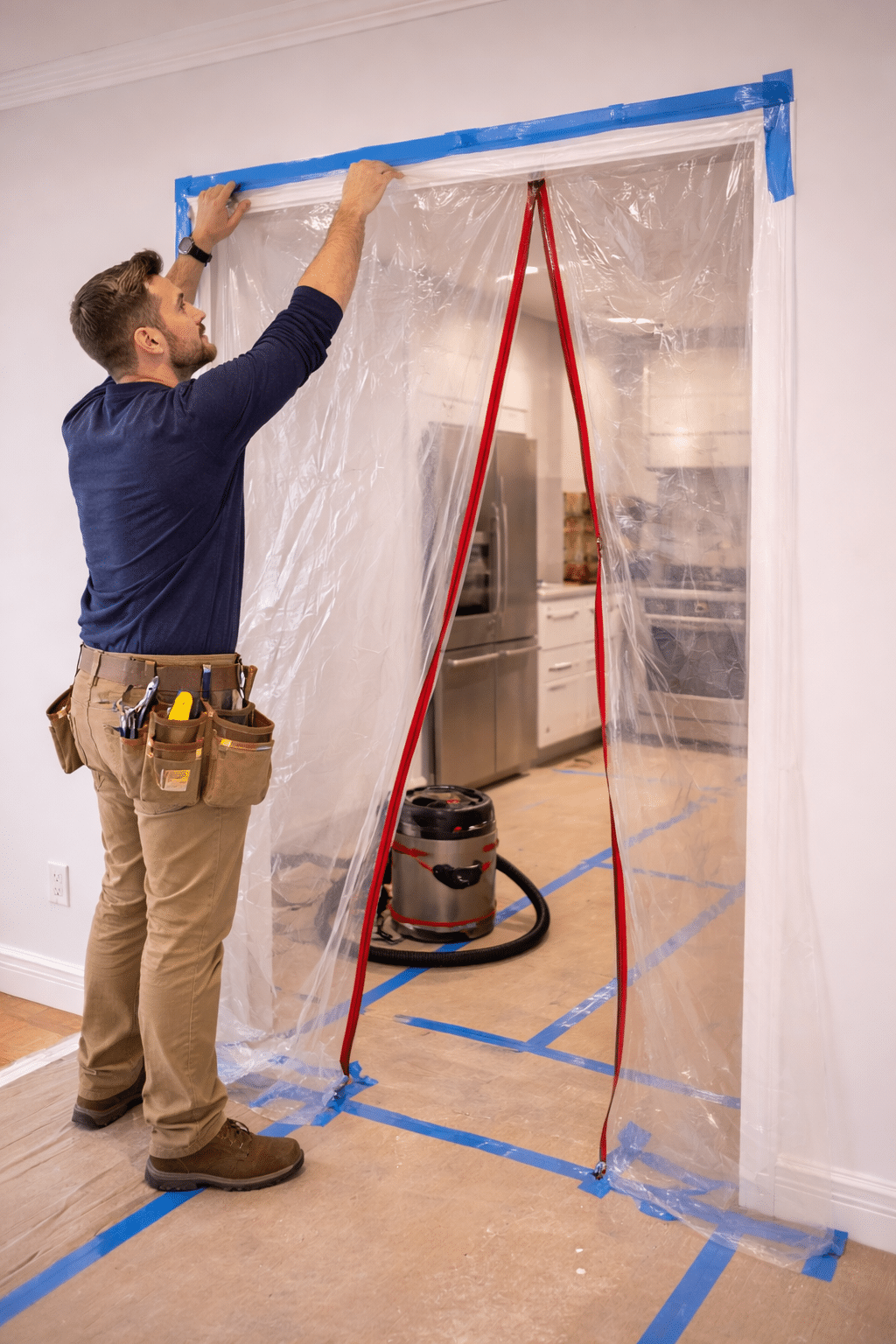
Kitchen work generates fine dust and constant foot traffic. A disruption plan should include physical separation, not just good intentions. Dust barriers, floor protection, and a defined entry route for trades reduce the amount of cleaning you do every day.
Air movement matters. Cutting, sanding, and demolition can carry dust into adjacent rooms through return air paths and open stairwells. A good plan anticipates this by isolating the work zone, controlling openings, and keeping adjacent areas protected, especially if anyone in the household is sensitive to dust.
Noise is also predictable. Identify quiet zones for calls, homework, and sleep, and plan for heavy-demo days. If you have pets, plan containment and safe exterior access so doors are not being opened repeatedly into a chaotic area.
If the scope includes structural changes, there may be short periods where access routes change. Planning those routes in advance keeps the house safe and avoids last-minute furniture moves.
Meals and routines during the fully offline window
Most kitchen projects have a short window where the room is fully offline. This is usually tied to demolition, mechanical rough-ins, and the transition to new cabinetry. The households that handle this best treat it like a planned interruption, not a daily decision.
A simple approach is to plan for a limited menu that uses minimal tools and produces minimal dishes. Some households batch-cook before demolition and freeze portions. Others plan a short run of prepared meals and accept that it is temporary.
What matters is that the plan is decided in advance so you are not solving meals under stress each evening. If you have kids, decide what breakfast looks like on school days, where lunches are assembled, and where snacks are stored so the routine stays steady.
If you work from home, also plan your coffee and water routine. It sounds small, but the small daily conveniences are often what make a renovation feel manageable.
Communication that prevents surprise days
Even with a good plan, kitchens have moments where access changes quickly. The simplest way to reduce stress is a short lookahead that tells you what is changing and when. That lookahead should call out any days with limited water access, limited power, or full-area shutdown.
The lookahead should also clarify what you need to do as the homeowner. Sometimes that is clearing a counter. Sometimes it is emptying a cabinet before a specific morning. Clear responsibilities prevent scramble and keep the trades productive.
Change control matters here. A small late change can shift the sequence and extend disruption. When changes are documented early with clear ripple effects, you can decide with confidence rather than reacting mid-build.
A short vignette of what happens when disruption is not planned
A homeowner planned their new kitchen carefully, but did not plan how they would live during the work. On demolition day the sink and most of the counters disappeared, and the fridge was moved to clear access. For the next week, grocery bags landed on the floor, dishes piled up in random bins, and meals became a nightly scramble. The work itself was progressing, but the household felt disorganised and tired. Once a simple temporary setup was created near a utility sink and a clear staging shelf was assigned for daily items, the stress dropped immediately. The renovation did not change. The living plan did.
A practical self-check before demolition day
Use this as a decision gate. If you cannot answer these items clearly, the project is more likely to feel chaotic than it needs to be.
- You can describe your temporary kitchen setup, location, and storage plan in one minute, including where water comes from.
- You know which days the sink, fridge access, or main circuits are expected to be unavailable, and you have a workaround for each.
- You have a dust and floor protection plan that covers adjacent rooms and a defined path for trades.
- You have a plan for kids and pets that keeps them out of the work zone without constant supervision.
- You have a daily clean-up routine and bin locations so clutter does not spread through the house.
- Your key selections that affect timing are locked, and any optional changes are being treated as controlled changes.
Visit www.oakwood.ca to explore OakWood’s benchmark design-build process
Email info@oakwood.ca for a professional, no-obligation discussion
Call 613-236-8001 to speak directly with an OakWood expert