

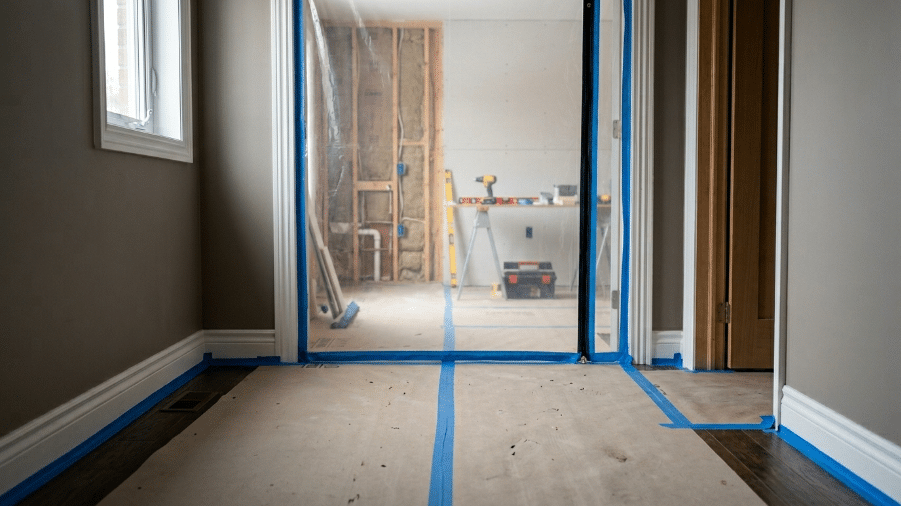
Renovation budgets and schedules do not fall apart because a contractor cannot do the work. They fall apart because the work was never defined in a way that could be priced and sequenced with confidence. Scope definition is the step that turns a renovation idea into a clear, room-by-room plan with boundaries, assumptions, and decisions that are actually measurable.
In Ottawa, this matters even more. Older housing stock, tight access, winter scheduling, and approvals pathways can all introduce constraints that change what is practical. If the scope is vague, those constraints show up late, when changes are expensive and tempers are short.
A benchmark-level approach treats scope definition as a control discipline, not a paperwork exercise. OakWood uses it to protect homeowners from accidental omissions, protect trades from guesswork, and create a fair basis for pricing that aligns with how the project will really be built.
What scope definition means (and what it is not)
Scope definition is the written and visual description of what will be built, where it will be built, and what is included or excluded. It connects the existing conditions of your home to the proposed outcome so that pricing is tied to real assemblies and real access, not an optimistic interpretation of a short wish list.
It is not the same as choosing finishes. It is also not the same as producing fully detailed construction documents. A good scope definition can be created before every finish is selected, but it must still be specific enough to prevent major categories from being left open-ended.
Think of scope definition as the bridge between feasibility and final design decisions. Feasibility tells you what is possible and what constraints matter. Scope definition turns that into a defined package that can be priced, scheduled, and delivered without constant renegotiation.
Why renovations drift when scope is vague
Most renovation surprises are not truly surprises. They are the result of gaps in scope that were present from day one. When a builder prices a vague scope, they either price high to protect themselves or price low and rely on changes later. Neither outcome is good for a homeowner who wants predictability.
Vague scope also creates mismatched expectations. One person assumes trim is included, another assumes it is excluded. One person assumes appliances are supplied, another assumes they are not. These are not bad people problems. They are definition problems.
Scope drift often starts with a single missing decision that forces a chain reaction. If the electrical plan is undefined, lighting decisions get pushed. If lighting decisions get pushed, drywall timing changes. If drywall timing changes, paint, flooring, and cabinetry dates slide. That is how a small gap becomes a schedule problem.
Room-by-room clarity is faster than you think
Homeowners sometimes resist room-by-room scope because it feels slow. In practice, it is the fastest way to reach clarity. A room-by-room inventory forces you to name each space that is touched and describe the work at the right level of detail for pricing.
A useful room-by-room scope does not read like a shopping list. It reads like an intent statement that connects to real work: what is being removed, what is staying, what is being built, and what must be protected.
Room-by-room scope also makes it easier to separate must-haves from nice-to-haves. That separation is the start of real budget control, because it gives you levers to pull if pricing comes in higher than expected.
If you want a practical starting point, these room-by-room prompts are a good baseline:
- List every room and space affected, including hallways, stairwells, and mechanical areas.
- Define demolition and protection: what is removed, what is protected, and what stays in service.
- Define new work by category: framing, mechanical changes, electrical changes, insulation, drywall, finishes, and fixtures.
- Call out any work that depends on an investigation or site verification, and state how it will be verified.
- Confirm who supplies major items (fixtures, appliances, specialty items) and what happens if lead times slip.
The three layers that make pricing meaningful
A renovation scope that only lists finishes is incomplete. Pricing becomes meaningful when scope is defined across three layers: visible finishes, hidden assemblies, and building systems.
Visible finishes are what most people talk about, such as flooring, tile, cabinetry, paint, and fixtures. Hidden assemblies are the structural and envelope components that support those finishes, such as framing modifications, subfloor build-ups, blocking, vapour control, and waterproofing layers. Building systems include plumbing, electrical, HVAC, ventilation, and controls.
Scope definition should also state what is being reused. Reuse is not free, and it is not automatic. Reusing a bathtub, reusing ductwork, or keeping an existing panel can be the right call, but it still requires verification and careful sequencing.
Inclusions, exclusions, and assumptions
A disciplined scope definition makes boundaries explicit. That means writing down what is included, what is excluded, and what assumptions the price is based on. This is not about fine print. It is about avoiding silent misunderstandings.
Inclusions are not just line items. They include performance expectations and workmanship standards. For example, if flooring is included, the scope should also state the underlayment approach, transitions, and how adjacent rooms will be handled.
Exclusions should be equally clear. If landscaping restoration is excluded, say so. If painting adjacent rooms is excluded, say so. If upgrading the entire electrical service is excluded unless a deficiency is found, say so.
Assumptions should be written in plain language. If the price assumes existing framing is adequate, state it. If the price assumes a certain joist direction, state it. If the price assumes tile can be installed on an existing substrate, state it. These assumptions are the items you can choose to verify before you commit.
Allowances and selections without false precision
Many renovation proposals use allowances to handle items that are not selected yet. Allowances are not inherently bad. They become a problem when they are used to hide uncertainty or when they are unrealistic for the quality level you expect.
A good scope definition states which items are allowances, what the allowance value includes, and what labour is assumed. For example, a fixture allowance should state whether it includes valves, trims, delivery, and any specialty installation requirements.
Selections also need timing. If a finish choice affects lead time or sequencing, it should be treated as a decision gate. That is how you avoid paying premium shipping, losing production slots, or forcing resequencing on site.
To keep allowances fair and transparent, insist on these basics:
- List every allowance category explicitly and keep the list short.
- State whether allowances include tax, delivery, and install accessories.
- Link each allowance to a decision deadline that protects the schedule.
Unknown conditions and how to define investigation work
Renovations carry unknowns, especially in older homes. The goal is not to pretend unknowns do not exist. The goal is to decide which unknowns you will investigate early and which you will carry as managed risk.
Scope definition should state what investigation work is included before final pricing is locked. That might include opening a small number of exploratory areas, camera inspections, selective removal, or targeted structural verification. The scope should also state what happens if a material condition changes the plan.
If the home will be occupied during construction, investigation and demolition planning is even more important. Dust control, temporary services, and safety barriers should be treated as scope items, not implied courtesies.
How scope ties into schedule and change control
A scope definition is not complete until it aligns with how the work will be sequenced. This is where many renovation projects lose time. A scope may be clear on paper, but if it ignores long-lead items or decision timing, the schedule will still drift.
Scope definition should call out long-lead items and their dependencies. Cabinetry affects electrical rough-in and lighting placement. Windows affect insulation, drywall timing, and trim sequencing. Specialty tile can affect waterproofing time lines. These are not minor details. They drive the critical path.
Change control is also part of scope definition. Even with perfect planning, changes happen. A fair process defines how changes are priced, how schedule impacts are handled, and who approves what. That is how you avoid end-of-project arguments about what was or was not included.
What a disciplined scope package looks like in practice
A homeowner should be able to look at a scope package and understand what will happen in each room, what decisions are still outstanding, and what assumptions are being made. It should also be obvious who is responsible for supply of key items and what the schedule depends on.
When scope is defined properly, pricing becomes a comparison of real approaches, not a comparison of omissions. That is how you avoid choosing a proposal that looks cheaper only because it is missing major categories.
A disciplined scope definition usually produces a compact set of artifacts like these:
- A room-by-room scope narrative that matches the proposed layout and elevations.
- A written inclusions and exclusions list in plain language.
- An allowances schedule with decision deadlines and what each allowance includes.
- A risk and assumptions list that is short, specific, and either verified or scheduled for verification.
- A preliminary sequence that shows the major phases and key owner decision points.
- A simple change process that states how pricing, approvals, and schedule impacts are handled.
How integrated design-build supports scope definition
Integrated delivery makes scope definition more reliable because the same accountable team is responsible for validation, design development, and construction planning. Scope definition is part of an integrated design and build path where constraints, pricing logic, and sequencing are addressed together.
Under the OakWood Design-Build Process®, scope definition is treated as a decision gate. The aim is not to overwhelm you with documents. The aim is to make sure the scope is complete enough that the price is anchored to reality, and the remaining unknowns are clearly managed.
The practical test is simple: if you cannot explain the scope back to someone else room by room, it is not ready for pricing. A benchmark approach protects both sides by making the plan clear before money and calendar commitments are locked in.
Renovation scope definition self-check
If you are about to ask for pricing, a scope definition should leave you with clear answers to decision gates like these:
- Each impacted room has a written scope that states demolition, new work, and what stays.
- Inclusions, exclusions, and assumptions are written in plain language, with no silent gaps.
- Allowances are listed with realistic values, clear inclusions, and decision deadlines.
- Unknown conditions are either investigated early or listed as managed risk with a plan.
- Long-lead items and owner decision timing are identified so the schedule is buildable.
- A change process exists that is fair, documented, and tied to schedule impacts.
The common scope-definition mistakes that create friction
Renovation friction usually comes from a small set of predictable mistakes. The first is treating scope as a finish list and leaving assemblies and systems undefined. The second is relying on allowances without agreeing on quality level. The third is assuming that minor gaps can be sorted out later without cost or schedule impact.
A good scope definition does not guarantee a painless renovation. It does give you control over the most common failure points. If you insist on room-by-room clarity, explicit boundaries, and decision timing that matches real lead times, you will be able to compare pricing fairly and move into construction with fewer surprises.
If you are planning a renovation or addition in Ottawa and you want a benchmark approach to scope definition that supports fair pricing and predictable delivery, OakWood can guide that work as part of an integrated design and build process.
Navigation
What scope definition means (and what it is not)
Why renovations drift when scope is vague
Room-by-room clarity is faster than you think
The three layers that make pricing meaningful
Inclusions, exclusions, and assumptions
Allowances and selections without false precision
Unknown conditions and how to define investigation work
How scope ties into schedule and change control
What a disciplined scope package looks like in practice
How integrated design-build supports scope definition
Renovation scope definition self-check
The common scope-definition mistakes that create friction
— CTA —
Visit www.oakwood.ca to explore OakWood’s benchmark design-build process
Email info@oakwood.ca for a professional, no-obligation discussion
Call 613-236-8001 to speak directly with an OakWood expert