

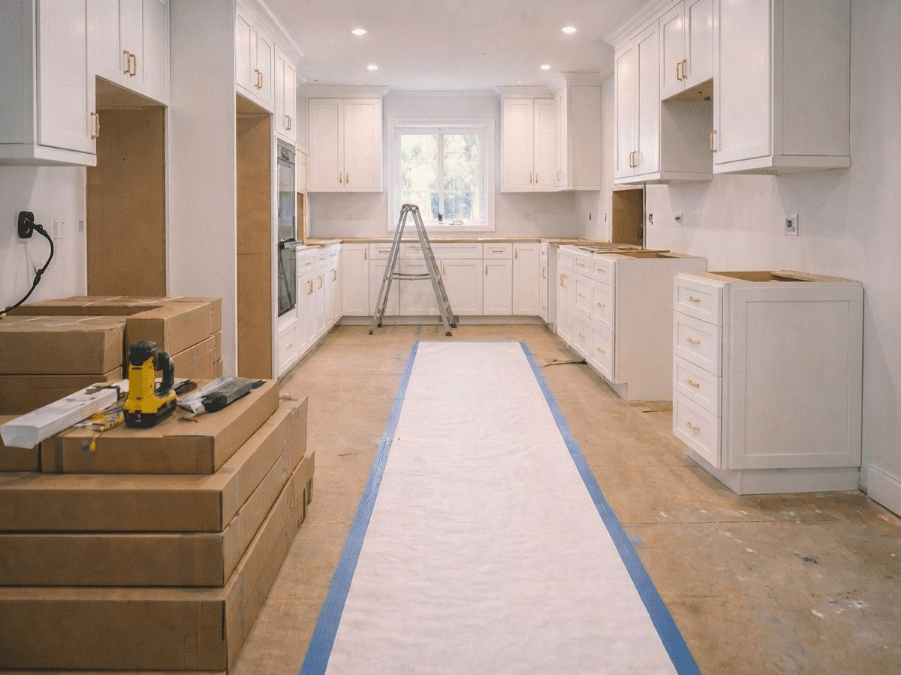
A renovation that feels easy is usually the result of control, not luck. The work is planned in a way that protects your day-to-day life, keeps decisions moving, and prevents surprises from becoming emergencies. When that control is missing, even skilled trades can look disorganized because the project is being driven by late choices and missing information.
In Ottawa-area homes, a calm renovation almost always has the same foundation: clear scope, disciplined decision timing, and a fair change process that keeps the relationship intact. Those are not marketing ideas. They are practical behaviours you can look for before you sign a contract.
We approach this through The OakWood Design-Build Process®. The goal is not to make the house easy. The goal is to make the work predictable enough that you can live through it without constant re-planning.
Why easy-feeling renovations are engineered, not lucky
Most homeowners judge a renovation by what they can see: finishes, craftsmanship, and the final look. Those matter, but the day-to-day experience is shaped earlier by how the work is organized. A renovation can have beautiful finishes and still be miserable if the sequencing is chaotic.
The difference is usually governance. Someone is actively managing constraints, decisions, and interfaces between trades. Materials arrive when they are needed. The site is protected and staged. Small unknowns are surfaced early enough to be addressed without panic.
When a renovation feels easy, it is often because the difficult conversations happened early. Scope was defined. Selections were made on time. The plan was written down. That discipline is what prevents a steady stream of daily micro-crises.
The hidden work that makes a renovation feel calm
Calm does not mean slow. It means the team is not improvising the critical path. Before construction starts, an organised builder will clarify what is being changed, what is staying, and what must be verified once walls are opened.
In real houses, the hidden work is risk control. That includes documenting existing conditions, confirming structural and mechanical constraints, and sequencing demolition so the home stays safe and functional.
Phasing is another quiet indicator of professionalism. If you are living in the home during construction, an organised plan will define what stays operational, when utilities are shut down, and how temporary solutions will work. That planning reduces disruption and also reduces rushed work that can create deficiencies later.
A professional team also plans the homeowner experience. Dust control, temporary access routes, protection of existing finishes, and daily site cleanliness are planned behaviours. They are not a favour. They are part of how the project stays liveable.
Scope clarity: the decisions that prevent rework
Scope clarity is the single biggest factor in whether a renovation feels controlled. It is not just a list of rooms. It is the specific definition of what is included, what is excluded, and what will be treated as a change if it comes up later.
The easiest place for scope to drift is at the edges: adjacent rooms, minor electrical additions, moving a vent, changing a door swing, or upgrading a finish mid-stream. Individually, these seem small. Collectively, they disrupt sequencing and multiply coordination time.
A strong scope definition is usually built room by room. It describes the work in plain language, with a consistent level of detail. It also locks in the selections that affect ordering, such as plumbing fixtures, tile, cabinetry, hardware, and lighting. When those are unclear, the schedule becomes a guess.
Good scope clarity also includes practical assumptions: access routes, working hours, protection standards, disposal, and who is responsible for moving or storing personal items. When those are vague, the team wastes time negotiating basics on site, and the homeowner feels like they are managing the renovation instead of living their life.
Decision timing: long-lead items and sequencing
Many renovation delays are not caused by workmanship. They are caused by decision timing. If a key item is not selected early enough, the builder cannot order it. If it is not ordered, it cannot arrive. If it cannot arrive, the work that depends on it stops.
Long-lead items are not exotic. In a typical renovation, cabinetry, windows, doors, custom millwork, certain fixtures, and some specialty finishes can affect the critical path. The project can only move as fast as the slowest dependency.
Decision timing also affects the quality of the work. Trades do their best work when they are not being asked to pause and restart. If a plumbing rough-in is completed and then a fixture decision changes, the rework can cascade into framing, tile layout, and cabinetry modifications. The earlier the decision calendar is defined, the fewer trade interfaces are forced into last-minute adjustments.
Sequencing matters because trades stack. Framing and mechanical work must be completed and verified before insulation and drywall. Waterproofing must be correct before tile. Cabinets must be installed before some countertops and appliances can be finalised. When decisions arrive late, the sequence breaks and rework begins.
OakWood uses schedules as working tools, not as promises. The schedule is a way to expose dependencies early so decisions happen before they become expensive.
Change control: how fairness protects both sides
Change control is the part most homeowners misunderstand until they live through it. A fair process does not block changes. It makes the cost and schedule impact visible before work proceeds.
A good change process has three parts. First, a written description of the change. Second, the impact on price and timing. Third, an approval step that protects both sides from misunderstandings later.
Without that structure, change becomes informal. Work is requested on a conversation, but the consequences show up weeks later as a strained relationship and a growing list of unresolved items.
In a benchmark renovation, the change process is also used to prevent accidental changes. If something is not in scope, it is treated as a decision point, not an assumption. That keeps the original agreement intact and keeps the project fair.
A fair change order also recognises that a change is rarely isolated. A small adjustment can affect other trades, site protection, inspections, and scheduling. Clear documentation keeps those impacts visible so you can choose whether the change is worth it, instead of discovering the cost indirectly through delays and disruption.
Communication and documentation: what visibility really means
A renovation feels easier when the homeowner is not guessing. Visibility does not mean constant meetings. It means the information you need is organised and current: what is happening this week, what decisions are needed, and what has changed.
The simplest tool is a steady cadence. A weekly look-ahead that identifies what is happening next, what decisions are needed, and what risks are emerging keeps the homeowner aligned with the team. When that cadence is missing, the homeowner is surprised by requests and the builder is surprised by hesitation.
Documentation is the practical backbone of visibility. Meeting notes, selection records, change documentation, and a clear deficiency list at the end prevent the project from relying on memory.
We support client visibility through documentation and communication systems, including access to project information through the OakWood App, framed as a way to keep information accessible. The benefit is not technology itself. The benefit is that the project runs on records instead of assumptions.
How to spot an organised renovation process before you sign
You can often tell whether a renovation will feel calm by how the builder handles the early phase. An organised team will ask for detail and will not rush to pricing without clarity.
Look for evidence that the builder can define scope in a repeatable way. You should see a room-by-room approach, clear assumptions, and a plan for dealing with unknown conditions once walls are opened.
You should also see decision timing mapped to the schedule. If selections are treated as a later problem, the project is being set up for delay. If change control is described as a normal, documented pathway, that is a sign of maturity.
Finally, pay attention to how the builder talks about permits and inspections. A disciplined firm will frame approvals as scope- and site-dependent, with coordination handled as part of the process where required, not as a guaranteed outcome.
Ask to see examples of how information is presented. A clear scope document, a selection schedule, and a standard change order form are not bureaucracy. They are the tools that prevent disagreement later. If a builder cannot show how they document decisions, they are likely relying on informal memory.
Decision gates you can use to tell if your renovation is being controlled
Use these decision gates to confirm that the ease you are feeling is real process control, not temporary good luck:
- The scope is written room by room, with clear inclusions, exclusions, and a defined approach to unknown conditions.
- Key selections are confirmed early enough to order long-lead items without compressing the schedule.
- The schedule shows dependencies in plain language and is updated when decisions or conditions change.
- Changes are documented before work proceeds, including impact on price and timing.
- Site protection and daily cleanliness are treated as planned behaviours, not informal habits.
- Closeout is planned, with a clear deficiency process and documentation handover.
Key terms in plain English
Scope: The defined set of work you are paying for, including what is included and what is excluded.
Critical path: The sequence of dependent tasks that determines the shortest possible project duration.
Long-lead item: A product or component that must be selected and ordered early because delivery affects the schedule.
Change: Any request that alters the agreed scope, selections, or sequencing after the baseline is established.
Change order: The written record of an approved change, including cost and schedule impact.
Sequencing: The planned order of tasks and trades so work can progress without rework or delays.
A calm renovation is a sign of good governance, not an easy house
Older homes, tight sites, and hidden conditions are normal in Ottawa. What separates a calm renovation from a stressful one is whether the team expects reality and plans for it.
The same principle applies to high-end and modest projects. Complexity is not only about size. It can be about living in the home, protecting existing finishes, working within tight access, or coordinating approvals. A governed process keeps those constraints visible so the team is planning, not reacting.
If you want a renovation that feels easy, look for a builder who can explain the system in plain language: scope clarity, decision timing, and change control. Those are the habits that protect your time, your home, and your relationship with the team.
OakWood is trusted since 1956, and that longevity matters most in the processes that prevent problems, not in slogans. When the work is governed well, the project experience becomes calmer, even when the house itself is complex.
Visit www.oakwood.ca to explore OakWood’s benchmark design-build process
Email info@oakwood.ca for a professional, no-obligation discussion
Call 613-236-8001 to speak directly with an OakWood expert